
Choosing to build vs buy custom web application solutions depends on whether a business requires specialized features that off the shelf software cannot provide. Custom applications outperform pre-built tools when organizations need full control over scalability, unique workflows, and seamless integration with existing proprietary systems. This approach provides a strategic competitive advantage for companies with complex requirements that generic software fails to address.
Your team is likely frustrated by rigid software workflows that force your operations to adapt to the tool; rather than the tool supporting your unique business logic. While commercial platforms offer immediate deployment, they often introduce hidden inefficiencies that accumulate as your organization scales. This decision is not just about choosing a service provider; it is a fundamental strategic choice that dictates your long term agility and competitive edge in a crowded market. In this article, we examine the nuanced trade-offs between immediate speed and deep, long term customization. You will learn how to identify high-value scenarios for custom development, understand the true total cost of ownership, and leverage infrastructure advantages that ensure your application remains secure. We provide a practical framework to help you determine when a bespoke solution is the only way to achieve market-leading performance.
The Strategic Dilemma: Choosing Between Commercial Software and Custom Development
Every organization eventually faces a pivotal decision regarding its digital infrastructure. At the core of this conflict is the build vs buy custom web application debate. On one side, purchasing a Software as a Service (SaaS) license offers immediate deployment and predictable entry costs. On the other, investing in custom web application development allows a company to align its technology perfectly with its unique operational workflows and proprietary data structures.
In the San Jose market, where innovation serves as the primary currency, this choice extends far beyond simple IT line items; it directly influences market positioning. Selecting a generic, off the shelf platform often means adopting the same functional limitations as your competitors. For firms aiming to disrupt their industry or protect a specific competitive edge, owning the intellectual property behind their software is a strategic necessity. A custom build ensures that your digital tools evolve alongside your business objectives rather than becoming a functional bottleneck.
PulseForge brings over 14 years of experience to this transition, often integrating computer hardware solutions with high performance software to solve complex problems. While commercial software provides a temporary fix, building a proprietary platform establishes a foundation for long term leadership. By utilizing Agile methodologies, organizations can manage this investment effectively, ensuring the final product addresses specific technical requirements that generic solutions frequently ignore.
The Realities of Off the Shelf Software: Speed, Convenience, and Constraints
While the build vs buy custom web application decision is complex, the initial appeal of commercial software is undeniable. Off the shelf products offer rapid deployment; organizations can often move from procurement to production in a matter of days. The low entry cost and predictable monthly pricing make it an attractive option for tight operational budgets. Furthermore, the vendor assumes responsibility for security patches and version updates, which offloads the maintenance burden from internal IT teams.
However, these advantages often mask long term operational friction. Off the shelf software is designed to serve a broad market, meaning it prioritizes commonality over specificity. This lead to "one size fits all" constraints where your unique business logic must be squeezed into rigid templates. When the software cannot adapt to your needs, you are forced into process bending. This occurs when a company changes its successful, efficient internal workflows to accommodate the software's technical limitations. Instead of technology serving as an accelerator, it becomes a hurdle that degrades the very efficiency that makes your business competitive.
Beyond functional rigidity, businesses must contend with subscription fatigue and a lack of control. Monthly fees represent a permanent overhead without the equity of an owned asset. Furthermore, you remain at the mercy of the vendor's product roadmap. If the provider decides to sunset a critical feature or pivot their focus away from your industry, your operations are left vulnerable. For organizations requiring deep computer hardware solutions or specialized data handling, these generic structures often fail to provide the necessary flexibility.
When to Choose the Custom Route: Identifying High Value Scenarios

Deciding to commit to custom web application development depends on identifying exactly where standardized software fails to support your strategic goals. The primary indicator for a custom build is the existence of proprietary business processes. If your operational logic provides a competitive edge, using a generic platform forces you to broadcast your secret sauce into a public feature set or, worse, abandon it for a standard workflow. When the software serves as the primary engine for your revenue or a unique service delivery model, owning the underlying intellectual property is a business safeguard. In these cases, the software is the business.
Another critical trigger is the requirement for deep integration with computer hardware solutions. While many SaaS products offer basic API connections, they often lack the low-level communication protocols necessary for specialized environments. PulseForge frequently works with organizations that must bridge the gap between modern web interfaces and legacy hardware, IoT ecosystems, or localized server configurations. If your digital product requires precise control over hardware inputs or high speed data acquisition from on-site equipment, a custom solution provides the necessary drivers and latency controls that off the shelf tools cannot provide.
Scalability and data sovereignty also play a significant role in the build vs buy custom web application assessment. Commercial platforms are built for the median user, meaning they often struggle with non-standard data structures or extreme spikes in processing demand. If your roadmap involves handling massive datasets or specialized regulatory compliance that requires precise control over data residency, a custom build offers the architectural freedom to scale without vendor-imposed limitations. In these high value scenarios, the investment in custom code ensures that the technology scales precisely with the organization's growth rather than becoming a bottleneck at a critical inflection point.
The PulseForge Approach: Agile Methodologies for Scalable Results
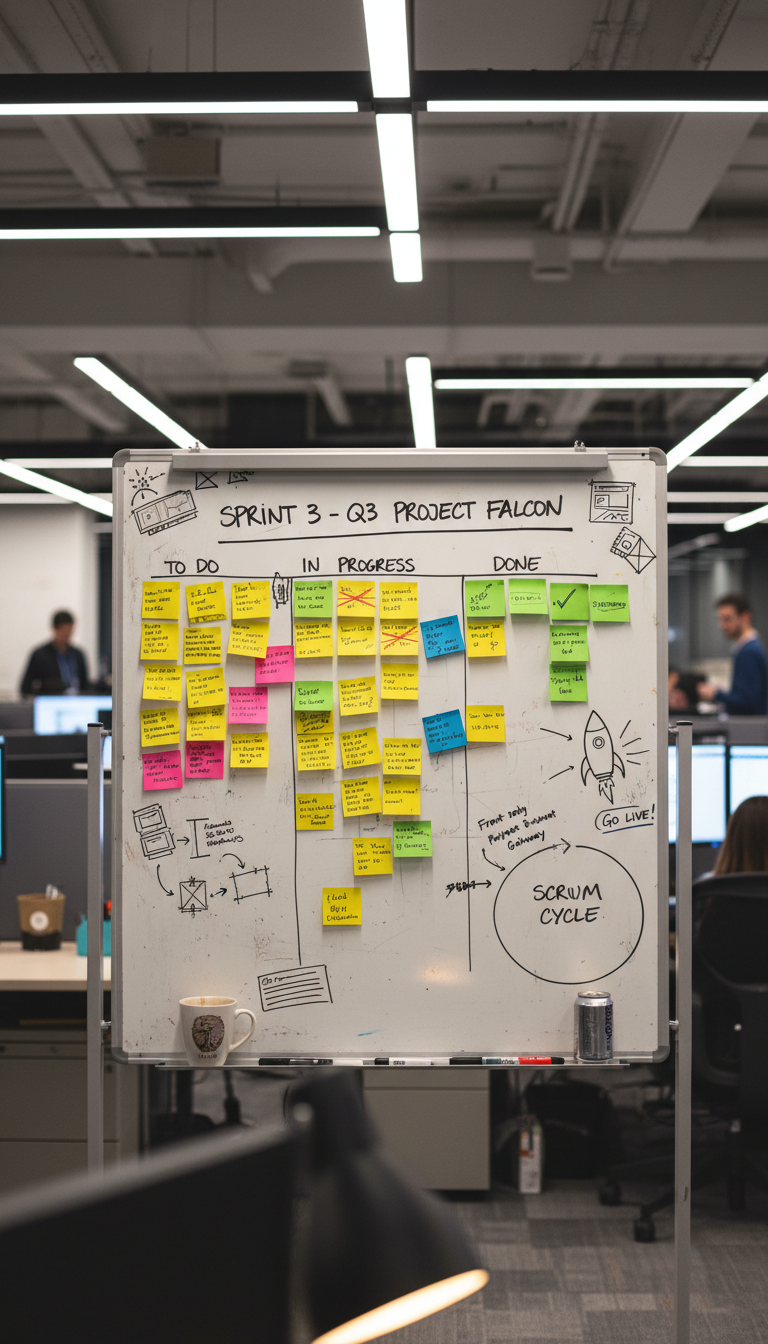
Transitioning from identifying high value scenarios to execution requires a framework that manages technical risk effectively. PulseForge leverages a team of over 600 professionals to deliver custom web application development through a lens of operational precision. By utilizing Agile methodologies, we actively mitigate common 'build' pitfalls such as scope creep and budget volatility. This iterative approach ensures that the project remains aligned with your core business goals while providing the flexibility to pivot as market demands shift.
Our 14 year track record in San Jose provides a unique advantage; we understand the specific technical requirements of the local ecosystem, from agile startups to established multinationals. This deep regional expertise, combined with our ability to integrate computer hardware solutions, ensures that the final product is not just a standalone tool but a scalable asset. When evaluating the build vs buy custom web application trade off, our structured development process transforms technical complexity into a predictable, high performance reality.
Total Cost of Ownership: Beyond the Initial Price Tag
Evaluating the build vs buy custom web application choice requires a transition from looking at initial setup fees to analyzing the Total Cost of Ownership (TCO) over a three to five year horizon. Commercial SaaS platforms often lure organizations with a low barrier to entry, but these recurring subscription costs scale linearly with your headcount. For a San Jose firm expanding from 50 to 500 users, a monthly per seat fee transforms from a manageable line item into a permanent tax on operational growth. Over five years, the cumulative cost of renting software frequently exceeds the price of building a superior, proprietary version.
Beyond licensing, commercial software often involves hidden integration fees or premium support tiers. Data portability remains a significant financial hurdle; many vendors create export hurdles or charge substantial fees to retrieve your own data if you choose to migrate. Conversely, an investment in custom web application development represents a front loaded capital expenditure that transitions into a low maintenance model. Once the core platform is built, your costs shift toward minor updates and hosting, rather than paying for the right to access your own business logic.
Financial Factor | Off-the-Shelf (SaaS) | Custom Build (PulseForge) |
|---|---|---|
Initial Investment | Low (Setup + Monthly Fee) | High (Strategic Development) |
Scaling Costs | High (Per Seat/User Fees) | Low (Infrastructure Scaling) |
Asset Status | Operational Expense (Rent) | Capital Asset (Owned IP) |
Integration | Limited/Fee-based APIs | Native/Hardware Optimized |
Owning your code also creates long term equity. Unlike a rented service, a custom application is a proprietary asset that enhances the company's valuation. By leveraging computer hardware solutions to optimize the underlying infrastructure, organizations can further reduce long term overhead by hosting on efficient, owned server environments rather than paying the inflated markups of general cloud providers. This shift from renting to owning ensures that your technology remains a high performance asset rather than a growing liability.
Security and Infrastructure: The PulseForge Hardware Advantage

While many development firms treat software as an abstract layer floating in the cloud, PulseForge recognizes that code eventually lives on physical assets. A critical part of the build vs buy custom web application decision involves understanding where your data resides and how it interacts with your local network. Off the shelf SaaS platforms typically lock you into their multitenant cloud environment, offering little visibility into physical security or localized latency.
By choosing custom web application development, organizations can optimize their software for specific computer hardware solutions. This might include tailoring database queries for localized NAS units or configuring high performance server racks to handle intensive computational loads without the overhead of public cloud throttles. When software is architected to match its physical environment, performance bottlenecks that plague generic solutions are eliminated.
For San Jose firms in sectors like biotechnology or defense, data sovereignty is often non negotiable. Generic SaaS providers often store data across global regions, which can violate strict compliance standards or intellectual property requirements. A custom build allows you to maintain absolute control over your infrastructure; you ensure that sensitive data never leaves your managed premises or approved private cloud. This level of granular security and hardware optimization remains a primary driver for organizations that cannot risk the shared security models of commercial software.
Making the Final Decision: A Checklist for San Jose Organizations
Synthesizing the build vs buy custom web application decision requires an objective evaluation of your long term operational goals. San Jose organizations should use the following decision matrix to determine if a proprietary build is the superior strategic path:
Question for Stakeholders | Build Indicators | Buy Indicators |
|---|---|---|
Core Differentiation? | Process is a proprietary competitive edge | Process is standard administrative work |
Hardware Needs? | Requires computer hardware solutions integration | Standard web browser functionality only |
User Growth? | Projected high volume or seat scaling | Stable, predictable, small user base |
Data Control? | Strict sovereignty or IP requirements | General SaaS security models are sufficient |
Workflow Flexibility? | Software must adapt to internal logic | Internal teams can adapt to software logic |
If your operational requirements align with three or more build indicators, investing in custom web application development provides the necessary foundation for sustained growth. In the high stakes San Jose market; custom builds serve as a primary vehicle for business agility. They ensure your technical infrastructure remains a flexible asset that can be modified at the speed of your innovation rather than being constrained by a third party vendor roadmap.